


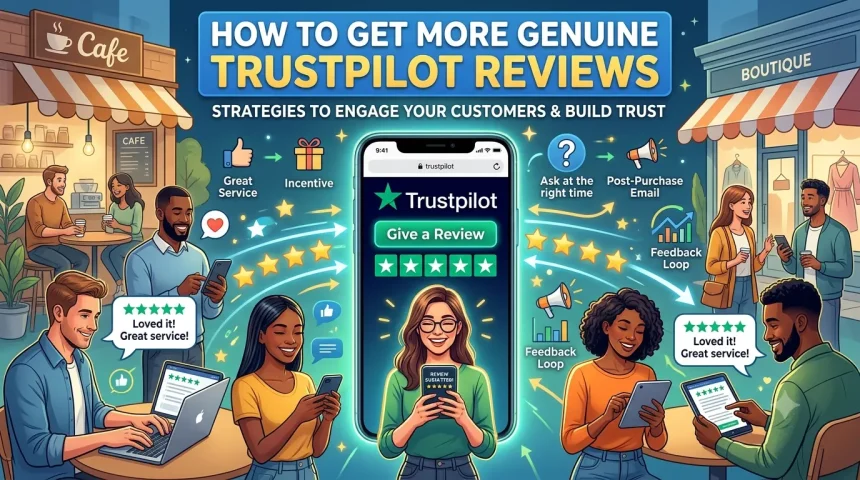
A customer buys your product, receives it on time, and has a good experience. You might assume they will leave a review, but most customers simply move on with their day. Meanwhile, someone who encounters a problem may be much more motivated to share feedback. If your business wants more genuine Buy Trustpilot reviews, the solution is not to pressure customers or chase five-star ratings. It is to make sharing honest feedback a natural part of the customer journey.
With a consistent process, businesses can collect useful reviews, understand customer expectations, and build a more credible online reputation.
Why Are Genuine Trustpilot Reviews Important for Businesses?
Customer reviews give potential buyers an additional source of information when deciding whether to trust a company. They can reveal details about product quality, delivery, communication, refunds, and customer support that may not appear on a business’s website.
Trustpilot provides a platform where customers can share their experiences with companies. For an unfamiliar brand, a profile with relevant, recent feedback may help prospective customers understand what doing business with that company could be like.
Genuine reviews are valuable for three main reasons:
- Customer confidence: Potential buyers can learn from other people’s experiences before making a purchase.
- Business improvement: Recurring feedback can reveal weaknesses in customer service, fulfilment, or product quality.
- Brand credibility: A transparent approach to customer feedback helps demonstrate that the business is willing to listen.
The emphasis should be on genuine feedback, not simply increasing the number of positive ratings. A business with a clear understanding of its customers can use reviews to improve its service and communicate more effectively.
7 Practical Ways to Get More Genuine Trustpilot Reviews
1. Ask Customers at the Right Time
Timing can make a difference when requesting customer feedback. If you send a review invitation before a customer has received an order or experienced your service, they may not have enough information to provide meaningful feedback.
Consider the natural completion point of your customer journey.
For an ecommerce store, this might be after delivery and a reasonable opportunity to use the product. For a digital agency, it could be after completing a project milestone. A software company might invite feedback after onboarding or a support interaction has been resolved.
Choose a timing that gives customers a fair opportunity to assess their experience. Avoid delaying invitations selectively until you believe a customer is likely to leave a positive review.
Practical tip: Map your customer journey and identify one appropriate moment when a review request would feel relevant rather than intrusive.
2. Make the Review Request Simple
Customers are more likely to complete tasks that require little effort. A long message with multiple instructions can make leaving feedback feel like another chore.
Keep your invitation short, explain why you are asking, and provide a clear route to your Trustpilot review page or approved invitation process.
For example, a business could send this email:
Subject: We’d appreciate your feedback
Hi [Customer Name],
Thank you for choosing [Business Name]. We’d appreciate hearing about your experience with us. Your honest feedback can help us understand what we’re doing well and where we can improve.
If you’d like to share your experience, you can leave a review on Trustpilot here: [Review Link].
Thank you for your time.
Best regards,
[Business Name] Team
The wording does not ask for a five-star rating or suggest that customers should leave positive comments. That distinction matters. The purpose is to invite honest feedback, not influence its content.
3. Automate Review Invitations Without Spamming Customers
For businesses handling dozens or hundreds of transactions, manually requesting reviews can become difficult to maintain. A simple automated workflow can help ensure invitations are sent consistently.
For example, an online retailer might trigger an invitation after an order reaches a defined fulfilment stage. A service business could send one after a project is completed.
Before implementing automation, establish clear rules:
- Send invitations only in connection with genuine customer experiences.
- Use accurate customer contact information and obtain any required permissions.
- Avoid repeatedly messaging customers who have already received an invitation.
- Respect unsubscribe requests and applicable privacy requirements.
- Follow Trustpilot’s current invitation and review-collection policies.
Automation should improve consistency, not create pressure. A well-timed invitation is generally more useful than multiple reminders that irritate customers.
4. Improve the Customer Experience Before Asking for Reviews
No invitation template can compensate for a poor customer experience. If customers repeatedly report delayed delivery, confusing pricing, or unanswered support requests, improving those areas should come before expanding your review campaign.
Read existing feedback and identify recurring complaints. For example, if several customers mention that refunds take too long, investigate the process instead of simply writing better review-request emails.
Useful improvements might include clearer delivery estimates, more transparent policies, better onboarding instructions, or faster customer support.
This creates a more sustainable approach to review collection. Customers are given a genuine reason to share their experiences because the underlying service is improving.
Businesses should not attempt to hide negative feedback by requesting reviews only from satisfied customers. An honest review process should give customers a fair opportunity to express positive, mixed, or negative opinions.
5. Use More Than One Appropriate Invitation Channel
Email is a common way to request reviews, but it may not be the only suitable channel for your business.
Depending on your customer journey and applicable rules, you could use an order follow-up email, a post-service message, or an invitation through an approved Trustpilot integration.
The important point is consistency and relevance. A customer should understand who is contacting them, why their feedback is being requested, and where the invitation leads.
Avoid sending unsolicited messages across several channels simply because a customer has not responded. A lack of response does not necessarily mean dissatisfaction, and repeated requests can damage the customer relationship.
Choose one primary method, monitor how customers respond, and adjust the process based on legitimate operational findings.
6. Respond to Existing Trustpilot Reviews
Collecting new reviews is only one part of reputation management. Responding to the feedback already available can show customers that the business pays attention to their experiences.
Thank reviewers for specific comments when appropriate. If someone raises a concern, acknowledge the issue and offer a suitable way to resolve it. Avoid sharing private customer information in a public reply.
For instance, if a reviewer reports difficulty contacting support, investigate the complaint and explain how they can reach the relevant team. If the issue is resolved, make sure the internal process is also improved where necessary.
Businesses should not make public responses conditional on customers changing or removing negative reviews. The goal is to resolve concerns fairly, not bargain for better ratings.
7. Monitor Results and Refine Your Process
A review strategy needs regular evaluation. Instead of focusing exclusively on the total number of reviews, examine whether your process is consistent and whether customers are finding it easy to provide feedback.
Track useful indicators such as:
- Number of invitations sent
- Number of reviews received
- Invitation-to-review completion rate
- Average time between a customer interaction and an invitation
- Common feedback themes
- Response time for customer concerns
Review these measures over a consistent period. If invitations receive little engagement, check whether the timing, wording, or customer journey needs improvement.
Avoid using rating increases alone as proof of success. A useful review process should generate authentic feedback and help the business understand its customers, even when that feedback identifies problems.
How ReviewMint Fits Into a Trustpilot Review Strategy
Businesses exploring review-related services may also come across ReviewMint. When evaluating ReviewMint or any other provider, focus on the actual service offered, transparent terms, and whether its practices support authentic, policy-compliant customer feedback.
A provider should not be used to manufacture customer experiences, create misleading testimonials, or guarantee positive ratings. Those approaches undermine the credibility that review collection is supposed to build.
For businesses managing their own Trustpilot presence, the fundamentals remain the same: deliver a reliable service, invite honest feedback, monitor customer concerns, and improve recurring issues. External services should complement that process rather than replace it.
Before using any review-related service, verify its current offering and confirm that the proposed methods comply with Trustpilot’s latest rules.
Quick Summary: Getting More Genuine Trustpilot Reviews
- Ask customers for feedback after they have had a meaningful experience with your business.
- Keep invitations short, neutral, and easy to complete.
- Automate appropriate review requests without sending excessive reminders.
- Improve recurring customer complaints instead of trying to suppress negative feedback.
- Use relevant invitation channels and follow platform policies.
- Respond professionally to both positive and negative reviews.
- Measure invitation performance and customer feedback, not just star ratings.
Frequently Asked Questions
How can I get more Trustpilot reviews from customers?
Create a consistent process that invites genuine customers to share honest feedback after a relevant interaction. Use clear messages, appropriate timing, and approved invitation methods. Review customer complaints regularly and improve the service where necessary.
Can I offer discounts in exchange for Trustpilot reviews?
Do not assume incentives are permitted. Incentivised reviews may be restricted or prohibited under platform rules and applicable laws. Check Trustpilot’s current policies before offering any reward, and never make an incentive conditional on a positive rating.
How often should I ask customers for Trustpilot reviews?
Use a consistent, non-intrusive process tied to genuine customer experiences. Avoid repeated invitations that pressure customers. The appropriate timing and frequency depend on the transaction, the service provided, and Trustpilot’s current invitation policies.
Do negative Trustpilot reviews hurt a business?
Negative reviews can raise concerns for potential buyers, especially when they describe recurring problems. However, they can also reveal opportunities for improvement. A professional response and meaningful corrective action can help demonstrate accountability.
Conclusion
Getting more genuine Trustpilot reviews starts with the customer experience, not a clever request template. Ask at the right time, make the process simple, and invite honest opinions without pressure. Then use the feedback to improve your service and respond constructively to concerns. Over time, a transparent and consistent approach can help your business build a more credible online reputation while giving prospective customers useful information for their decisions.